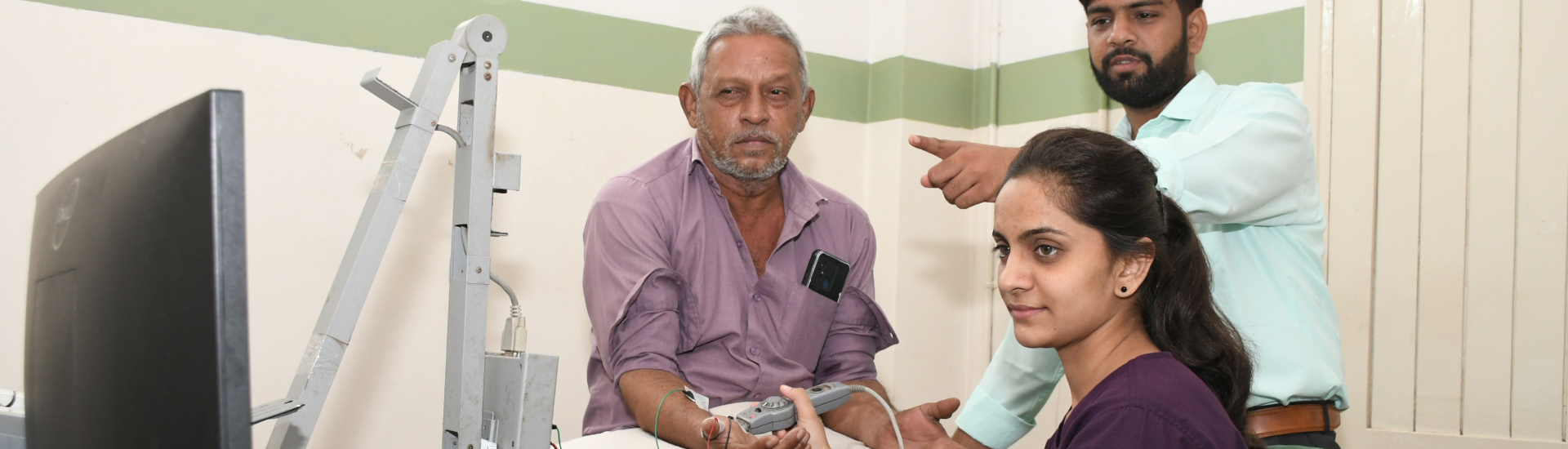
Electromyography (EMG) & Nerve Conduction Study (NCS) Unit
Overview
The Electromyography (EMG) and Nerve Conduction Study (NCS) Unit is a specialized diagnostic facility dedicated to the evaluation of neuromuscular disorders. This unit plays a crucial role in identifying abnormalities affecting peripheral nerves, neuromuscular junctions, and skeletal muscles. It supports accurate diagnosis, prognosis assessment, and treatment planning for a wide range of neurological and musculoskeletal conditions.
Objectives of the Unit
- To provide precise electrodiagnostic evaluation of nerve and muscle function
- To assist clinicians in early diagnosis of neuromuscular disorders
- To monitor disease progression and response to treatment
- To support academic training and research in neurophysiology and physiotherapy
Services Offered – Nerve Conduction Studies (NCS)
NCS evaluates the functional integrity of peripheral nerves by measuring conduction velocity, amplitude of response, and latency of nerve impulses.
Types of NCS performed:
- Motor nerve conduction studies
- Sensory nerve conduction studies
- F-wave and H-reflex studies
Clinical applications:
- Peripheral neuropathies (e.g., diabetic neuropathy)
- Nerve compression syndromes (e.g., carpal tunnel syndrome)
- Radiculopathies and plexopathies
Services Offered – Electromyography (EMG)
EMG assesses electrical activity of muscles at rest and during contraction using needle electrodes.
Key parameters:
- Motor unit action potentials (MUAPs)
- Recruitment pattern
- Spontaneous activity
Clinical applications:
- Myopathies
- Motor neuron diseases
- Neuromuscular junction disorders
- Chronic nerve injuries
Equipment and Technology
- Multi-channel amplifiers with high sensitivity
- Digital signal processing and noise reduction
- Real-time waveform display and analysis
- Automated reporting software
- Standardized stimulation and recording electrodes
Procedure Protocol
- Detailed clinical history and examination prior to testing
- Proper patient positioning and skin preparation
- Standardized electrode placement techniques
- Gradual and controlled electrical stimulation
- Sterile technique for needle EMG
- Continuous monitoring for patient comfort and safety
Indications for Testing
- Numbness, tingling, or burning sensations
- Muscle weakness or atrophy
- Suspected nerve injuries or entrapments
- Evaluation of neuromuscular disorders
- Post-surgical or rehabilitation follow-up
Advantages
- Non-invasive (NCS) and minimally invasive (EMG)
- High diagnostic accuracy
- Early detection of neuromuscular abnormalities
- Helps differentiate nerve vs muscle pathology
- Guides physiotherapy and rehabilitation planning
Role in Physiotherapy & Rehabilitation
- Identifying level and severity of nerve involvement
- Assisting in prognosis prediction
- Guiding individualized rehabilitation protocols
- Monitoring recovery in nerve injuries and neuropathies
Academic and Research Utility
- Training for undergraduate and postgraduate physiotherapy students
- Hands-on electrodiagnostic skill development
- Facilitation of clinical research
- Integration with evidence-based practice
Safety and Quality Assurance
- Infection control protocols
- Use of sterilized/disposable electrodes
- Regular equipment calibration
- Patient consent and ethical standards
Conclusion
The EMG-NCS Unit serves as an essential diagnostic and academic facility, enhancing diagnostic precision, supporting effective rehabilitation, and contributing significantly to education and research in neuromuscular sciences.